


A PERSONAL RADAR DEVICE TO HELP YOU AND YOUR NEIGHBORS KEEP YOUR STREETS SAFE
We all know that speeding in our neighborhoods is dangerous for our families, friends and neighbors. And for anyone who is concerned about speeding and is willing to help solve the problem, getting accurate speed data is critical.
ACCORDING TO THE FOUNDATION FOR TRAFFIC SAFETY, THE AVERAGE RISK OF DEATH FOR A PEDESTRIAN IS ONLY 10% AT A VEHICLE IMPACT SPEED OF 23 MPH, BUT JUMPS TO A 90% LIKELIHOOD OF DEATH AT 58 MPH.
Now there’s a powerful new tool called Pocket Radar in the fight for traffic safety. Because police can’t be everywhere all the time, this device allows you to work with neighbors, watch groups or community organizations to easily collect speed data and share with your local police. By starting a Traffic Calming Program or just calling attention to problem areas to get help from law enforcement, you can help protect your neighborhood.
POCKET RADAR PROVES THERE IS SAFETY IN NUMBERS WHEN WE ALL WORK TOGETHER.

POCKET RADAR BENEFITS
1) Fits in the palm of your hand and works under light clothing for discrete use.
2) Matches accuracy of police radar guns that cost thousands of dollars.
3) Push button simplicity for ease of use.

HOW DOES POCKET RADAR WORK?
Pocket Radar is very simple to use. Just point the device at oncoming vehicles or those moving away from you and push the button to instantly determine their speed. You can be discreet with Pocket Radar thanks to its small, convenient size. You can even hide it in your pocket to clock a speed, as it will work through most lightweight garments. Pocket Radar lets you safely and discreetly record vehicle speeds on your street to establish a sustained pattern of speeding. This data can be used to help local officials initiate a Traffic Calming Program, or call attention to problem streets with local law enforcement.
HOW ACCURATE IS POCKET RADAR?
Accuracy: +/- 1 MPH (+/- 2 KPH)
Speed Range: 7 to 375 MPH (11 - 600 KPH)
Pocket Radar technology is as accurate as that of police radar guns costing thousands of dollars and is certified by the IACP (International Association of Chiefs of Police) lab, which is the same certification agency for all police radars.

What is traffic calming?
The Institute of Transportation Engineers defines traffic calming as the combination of measures that reduce the negative effects of motor vehicle use, alter driver behavior, and improve conditions for non-motorized street users. Traffic calming consists of physical design and other measures put in place on existing roads to reduce vehicle speeds and improve safety for pedestrians and cyclists.
You might recognize some of the measures taken by local officials to slow speeders such as speed bumps, radar trailers, and increased signage. Many cities and local governments have Traffic Calming programs in place, which offer opportunities for concerned citizens to voice speeding concerns and start the process to slow speeders on their street, either by submitting requests online or by phone. Your first step should be to see if your municipality or local jurisdiction has a formal Traffic Calming program in place. If they do not have a formal Traffic Calming program, most police departments have a Traffic Safety officer or someone you can speak to about your speeding concerns. You can learn more about Traffic Calming by visiting these sites:

How will Pocket Radar help to slow speeders on my street?
Use Pocket Radar to collect overall speed data, recording all speeds of vehicles on your street to establish a sustained pattern of speeding. If you confirm there is a serious speeding problem, you can share data with local police or appropriate authorities. The first step in getting any speed reduction action taken is providing credible information so authorities will take action and begin a Traffic Calming Program for your street.
WE DO NOT RECOMMEND USING IT TO “CATCH” INDIVIDUAL SPEEDERS, FLAG DOWN VEHICLES, OR SHARE LICENSE PLATES OR NAMES OF SPEEDERS WITH LOCAL POLICE. PLEASE LEAVE TRAFFIC STOPS TO LOCAL LAW ENFORCEMENT.
SHOULD I USE POCKET RADAR BY MYSELF OR WITH OTHERS?
You can use it by yourself, but it’s even better working with a group – neighbors, Home-owner’s Associations, Neighborhood Watch, and city sponsored community teams are just a few examples. Working with a group that shares your concerns will provide support, distribute responsibilities, and provide a more powerful, unified neighborhood voice when working with local police. And most local police and traffic officials want to work with citizens committed to making their communities safer.
HOW DO I GET STARTED WITH TRAFFIC CALMING ON MY STREET?
1. Purchase the Pocket Radar PR1000 model, which is designed specifically for measuring the speed of vehicles.
2. Make a game plan – Are you going to gather speed data on your street by yourself or can you work with your HOA, Neighborhood Watch, other group or recruit neighbors to help? Remember, citizens working together and coordinating with local police are often the best way to bring neighborhood improvements. Decide the location and times of day/hours you want to record data (usually two or more days and multiple time slots are best to establish a pattern, especially during busy traffic times).
3. Establish a pattern of speeding – Record speed data over several days for an hour or two each day, such as Monday, Friday, Saturday during the busiest traffic hours. You can download our Speed Survey Data sheet to make it easy to write down speeds. While you will need to stand near the roadway to use Pocket Radar, you can do so discretely if you’d like, holding the Pocket Radar close to you or even in a jacket pocket (it will work through thin cloth). FOR YOUR SAFETY, DO NOT CONFRONT DRIVERS THAT ARE SPEEDING.
4. Work with local authorities – If the speed data you’ve collected shows a consistent pattern of a high percentage of vehicles excessively speeding (typically 10 mph or more over the posted speed limit), contact your local police Traffic Safety Department or Traffic Calming Department (each city or county government may treat this differently). Explain your concerns, present your credible speeding data results and request a Traffic Calming investigation (if your municipality has one) or other speeding investigation be initiated so that speed reduction measures can be taken. Since every police department and municipality has their own procedures, we cannot guarantee that they will accept your speed data without verifying on their own, but this accurate information should strongly help in supporting your complaint.

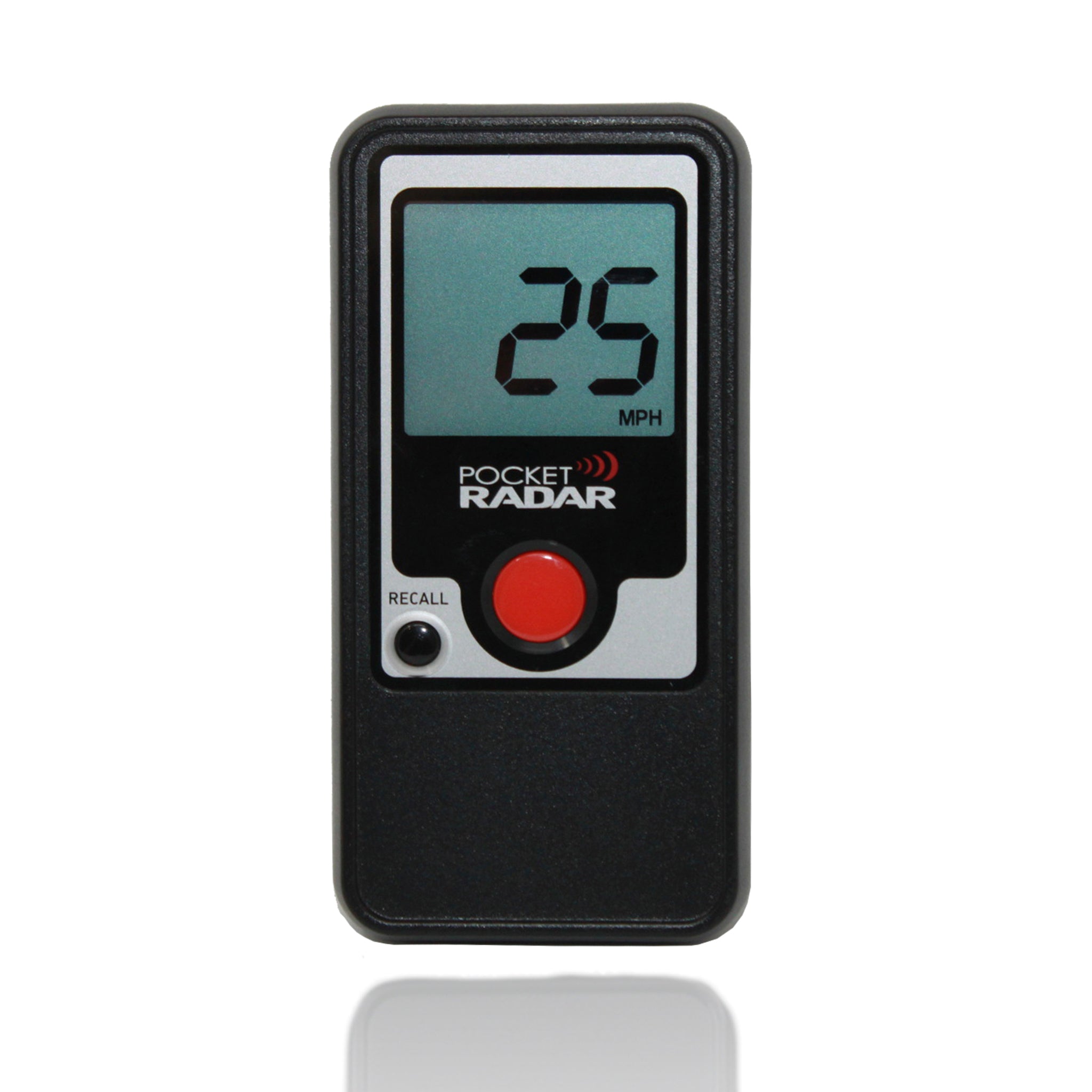
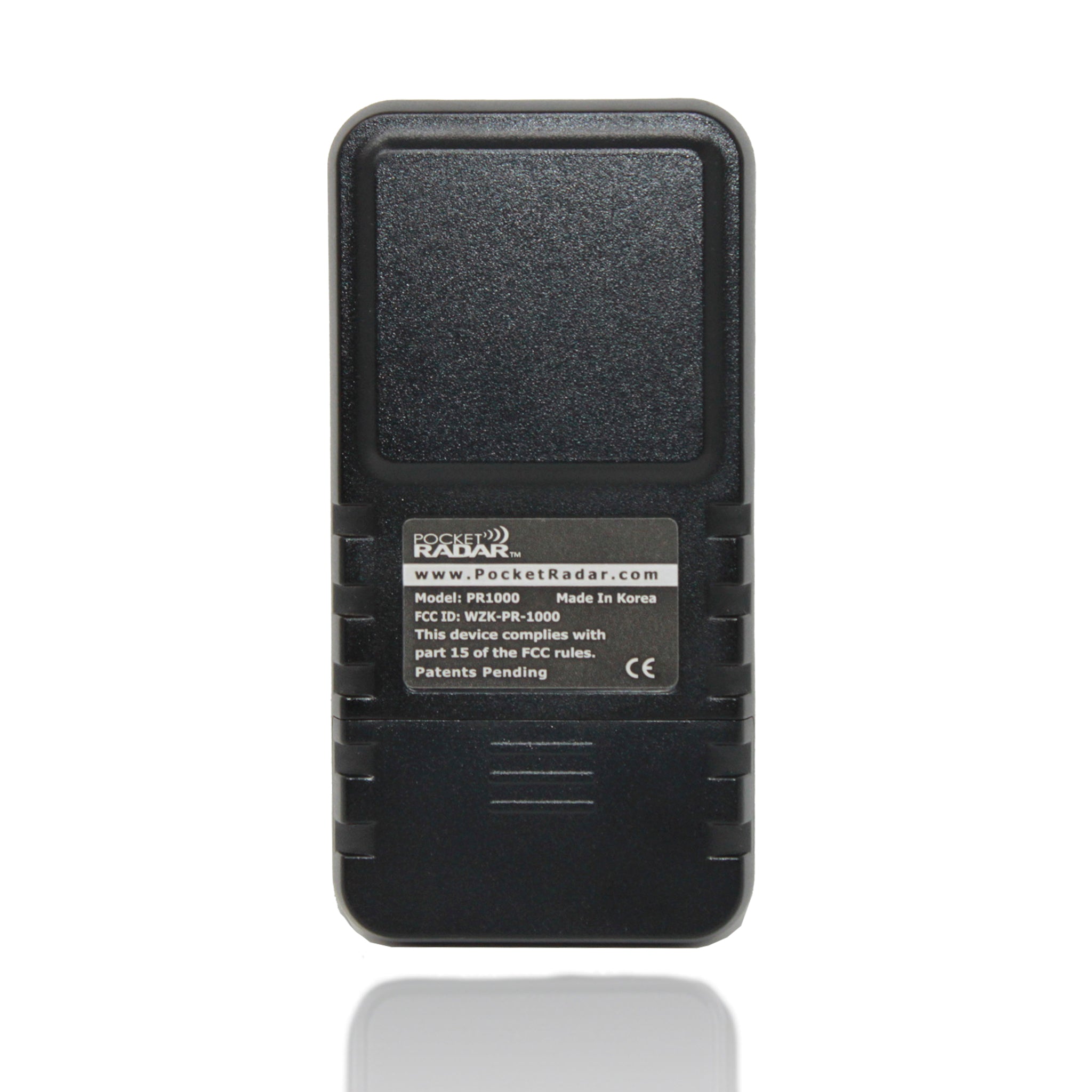
Traffic Radar™ (Model PR1000)
This model is specifically designed to accurately monitor the speeds of things that are in motion for several seconds or more like vehicles, runners, radio-controlled cars/planes, etc. This technology has been independently tested and certified accurate by the radar test lab designated by the International Association of Chiefs of Police, (IACP). However, it does not have all the features recommended for Law Enforcement use. This device is NOT intended for Judicial Speed Enforcement applications.
NOTE: NOT INTENDED FOR BALL SPORTS OR COMPATIBLE WITH APP
Product Includes: Radar, Carrying Case, Wrist Strap, 2 AAA alkaline batteries and Quick Start Guide
What customers are saying
Let customers speak for us
